POSEDUEL

AI-scored form on every rep

The home program
your kid begs to do

A monster-fighting game where the exercises your physio prescribed are the only controls — every rep scored for quality, every week reported back.

Join the waitlist

Takes 10 seconds — just your email. We invite families in small batches.

  • Matches your physio's prescription
  • Reports for your next appointment
  • Privacy in your control
  • Ages 8+ — an adult stays in the loop

Needs a laptop & a phone · Closed beta

See it work

Real moves in.
Real attacks out.

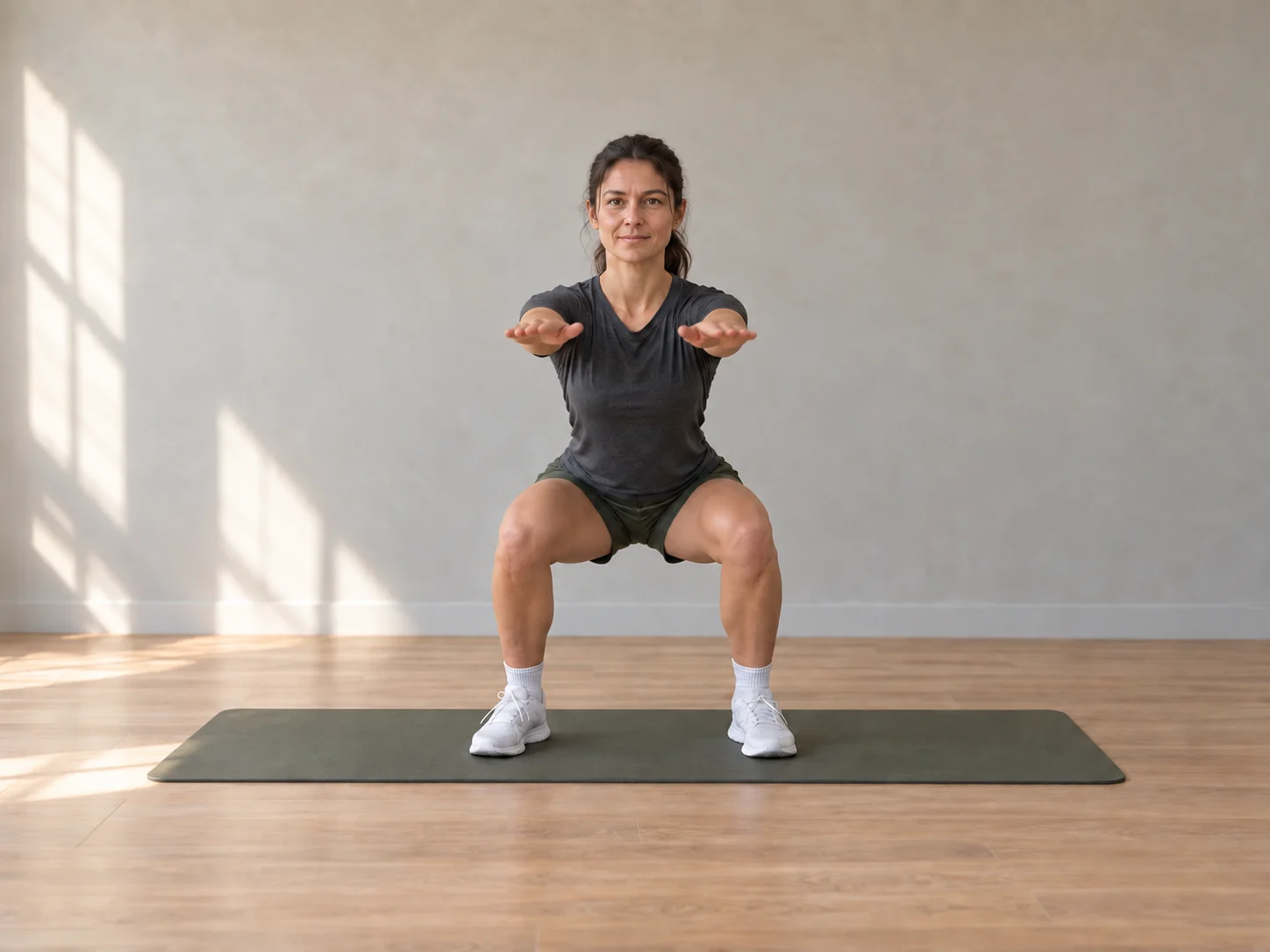
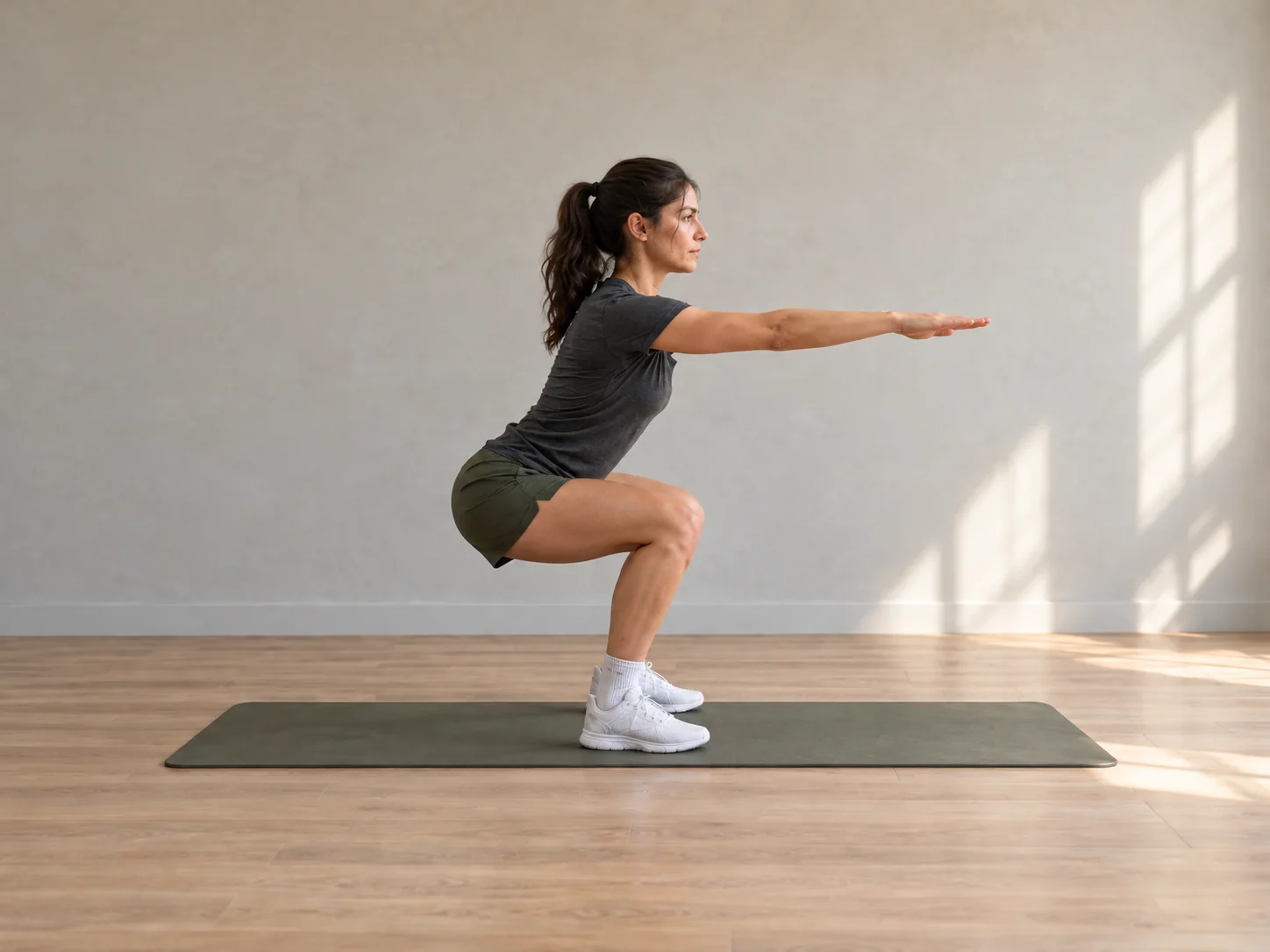
Our AI tracks every joint and scores the rep as they move — good form fires the spell. No fudging, no flailing.

What our AI sees animated stand-in — real sessions stay private

Every joint tracked · form scored /100

What they play real gameplay, captured in-engine

The physio loop

Built to make your physio more successful — not to replace them.

  • Their program, in the game

    You (or your physio directly) choose which exercises are in the program. We don't prescribe — we make the prescription happen.

  • Data a physio can use

    Movement quality scored on every rep, trended over weeks. The clinic sees ~25 minutes a week; this measures every rep of the other six days.

  • Give your physio direct access

    Invite your physio: they set the program, watch quality trends, review exemplary clips — on their terms.

How it works

Two cameras.
One champion.

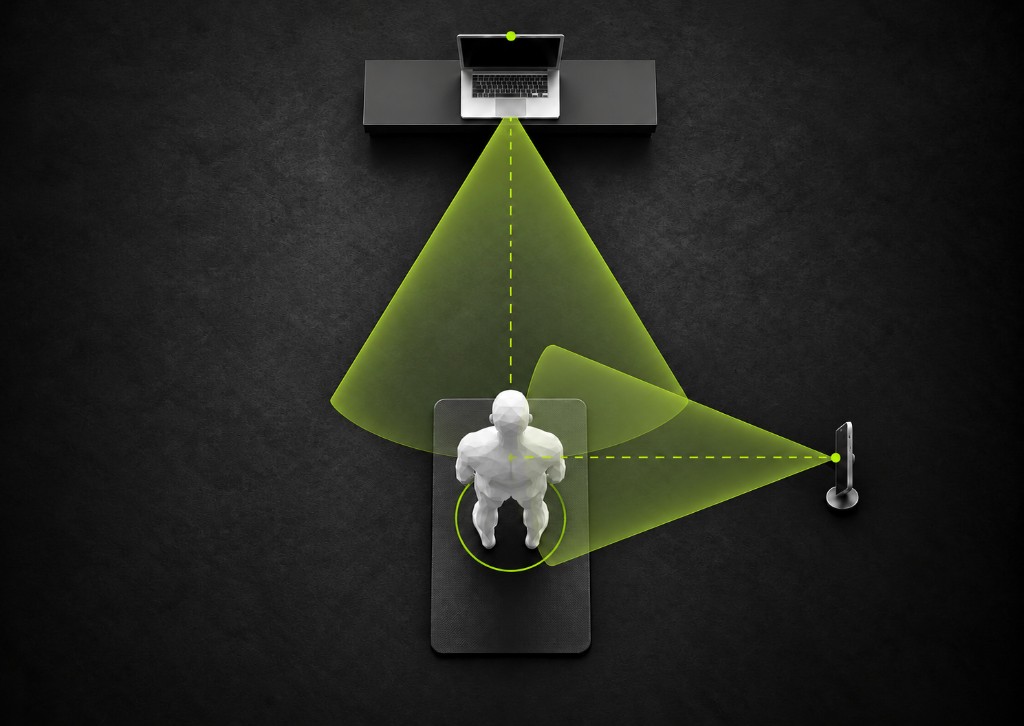
No wearables, no special gear — just the devices you already own.

  1. Pair a laptop + a phone

    Open it on your laptop, point your phone from the side. Two angles, set up in a minute.

  2. We model the move in 3D

    The two views build a 3D model of your child's body — depth and angles a single camera can't see.

  3. Graded like it matters

    Tempo, depth and control scored on every rep against physiotherapy-informed standards — only clean reps power the attack.

Why this exists

The half hour a week is not where the change happens

Weekly physio is where a child's program gets designed, corrected and pushed forward. It matters. But it is a fraction of the practice a body needs to actually change — and the rest of it happens in your living room, or it doesn't happen at all.

Our son did 18 months of weekly physio. His gait didn't change — not because the therapy was wrong, but because the daily home exercises it depended on never happened. The evidence says the home program is where change accumulates, and it's the part nobody can make a 10-year-old do. So we built the game that makes him beg to do it. Every rep counted. Every rep scored.

— Mike, PoseDuel founder
  1. 50–80%

    The home program is most of the therapy

    In children with cerebral palsy — the population where this has been measured most closely — home exercise programmes account for 50–80% of the total therapy received; sessions with the therapist present make up the remainder.1 The clinic hour is at most half of the treatment.

  2. 17.5×/month

    Done regularly, it works

    In a double-blind randomised controlled trial of an occupational-therapy home programme for children with cerebral palsy, eight weeks produced significant gains in function — at a measured dose of about 17.5 sessions a month, averaging 16.5 minutes each.2 That's the dose at which the trial saw change: roughly four short sessions a week.

  3. Repetition

    Because that's how motor learning works

    In neurorehabilitation, experience-dependent plasticity has requirements, and two of them are repetition and intensity: the change rehabilitation is after does not consolidate without enough correct practice.3 Frequency isn't nagging. It's the mechanism.

  4. The gap

    And that's exactly the part that doesn't happen

    In children and adolescents, the recurring barriers to doing prescribed exercise are time, setting, and negative exercise experiences; the recurring facilitators are social support and positive ones.5 The same pattern showed up decades earlier in adult physiotherapy: the three main correlates of non-compliance were the barriers patients encountered, a lack of positive feedback, and helplessness.4 Nobody's family is failing at this. The format is.

What the same research points to

“Making exercise enjoyable, social, and convenient may be important to maximizing adherence in this population.” — Holt et al., J Orthop Sports Phys Ther, 20205

Enjoyable, social, convenient, built on positive feedback: that is a description of a good game, and it is what shaped the design brief for PoseDuel. Your physio sets the program. We make the reps happen on the other six days, score every one of them, and send the record back to the person qualified to read it.

References
  1. Johnson RW, Williams SA, Gucciardi DF, Bear N, Gibson N. Evaluating the effectiveness of home exercise programmes using an online exercise prescription tool in children with cerebral palsy: protocol for a randomised controlled trial. BMJ Open. 2018;8(1):e018316. doi:10.1136/bmjopen-2017-018316
  2. Novak I, Cusick A, Lannin N. Occupational therapy home programs for cerebral palsy: double-blind, randomized, controlled trial. Pediatrics. 2009;124(4):e606–e614. doi:10.1542/peds.2009-0288
  3. Kleim JA, Jones TA. Principles of experience-dependent neural plasticity: implications for rehabilitation after brain damage. J Speech Lang Hear Res. 2008;51(1):S225–S239. doi:10.1044/1092-4388(2008/018)
  4. Sluijs EM, Kok GJ, van der Zee J. Correlates of exercise compliance in physical therapy. Phys Ther. 1993;73(11):771–782. doi:10.1093/ptj/73.11.771
  5. Holt CJ, McKay CD, Truong LK, Le CY, Gross DP, Whittaker JL. Sticking to it: a scoping review of adherence to exercise therapy interventions in children and adolescents with musculoskeletal conditions. J Orthop Sports Phys Ther. 2020;50(9):503–515. doi:10.2519/jospt.2020.9715

These studies describe home-program dose and exercise adherence in paediatric rehabilitation and physiotherapy; several were conducted in specific populations (cerebral palsy, adult outpatients) and are cited here for the pattern they establish, not as proof about every child. None of them is a study of PoseDuel. They are the reason it was built the way it was, not evidence that it works — that evidence is what our clinical pilots are for.

From $29/mo per kid

14-day free trial at launch · All plans include every privacy mode — privacy is never paid · See pricing

Early access

We're in closed beta

Closed beta — we're building with a small group of families first. Join the waitlist and we'll bring you in as we open up more spots.

Beta invites only — no marketing, and we'll delete your email on request.

Run a clinic? poseduel.com/clinicians

Questions, answered

Which exercises does it cover?

Eleven movements today — squats, lunges, planks, jumps and more, matching standard lower-body and core home programs — configurable by you or your physio.

Do we need a physio to use it?

No — sensible defaults are included. But PoseDuel is built to run the program yours prescribed, and report back.

Can my kid use it alone?

No. An adult supervises the child's movement during play. PoseDuel is built for a parent and kid together — the AI movement coach is imperfect, and it will miss things a trained eye catches.

Does it replace physiotherapy?

No. PoseDuel's coaching is AI, not a physiotherapist. It makes your physio's home program happen — keep following their advice.

What do you record?

Only what you allow — you control what leaves the device, and privacy is never a paid feature. The full picture is in our Privacy Policy.

Is video of my child uploaded?

Sessions are captured through your cameras to score reps and improve detection — what's stored, and for how long, is spelled out plainly in the Privacy Policy. We never sell data and never show ads, in any mode, on any plan.

How long is the waitlist?

We invite families in small batches as the beta stabilises — you'll hear from us by email either way, and clinics running pilots can reach us directly at hello@poseduel.com.

What do we need at home?

A laptop + a phone, about 2×2 m of clear space, and Chrome. Any reasonably recent laptop works — nothing to install, it runs in the browser.

Can we use a tablet instead?

Not yet — you need a laptop or desktop running Chrome, plus a phone for the side view. Nothing to install: it runs in the browser.

Ages? Cost?

Ages 8+, with an adult in the loop · see pricing.